
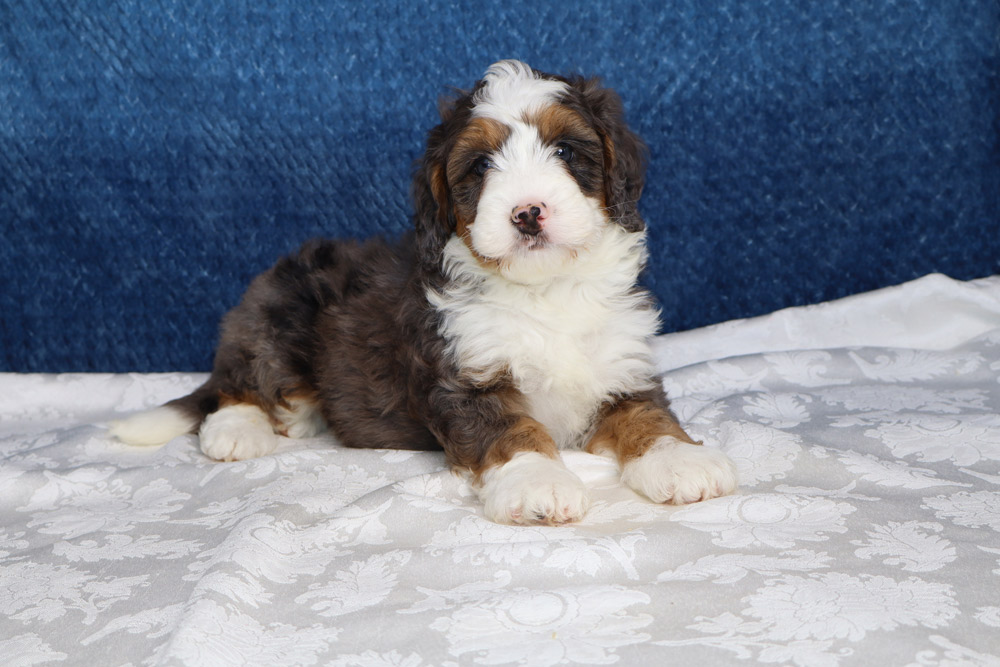
The Bernedoodle is a designer crossbreed between the Bernese Mountain Dog and the Poodle. This breed was deliberately created for companionship. That purpose shapes both males and females in ways that narrow the differences between them. At Blue Diamond Bernedoodles, every puppy gets an individual evaluation before placement. Sex is one factor in a much longer list.
What Both Sexes Share in This Breed
The Bernese Mountain Dog contributes calm loyalty and a goofy, affectionate nature, and the Poodle adds sharp intelligence, a low-shedding coat, and an eagerness to learn that makes the combination unusually trainable. Both sexes carry those core traits in equal measure. Males and females alike form strong family bonds, respond well to positive reinforcement, and adapt comfortably to households ranging from active families with young children to quieter homes with older adults. Character in this cross runs deeper than chromosomes.
Bernedoodles are also certified as therapy dogs at a high rate, and that’s a breed-level trait rather than a sex-specific one. The intelligence from the Poodle side and the calm, attentive warmth from the Bernese side combine in both males and females to produce a dog that reads people well. That quality shows up regardless of sex, generation, or size. The only real variable is how it’s expressed once a dog reaches full emotional maturity. Both sexes get there.
Generation and Size Carry More Weight Than Sex
Generation and size category shape the Bernadoodles’ temperament and adult weight far more than sex does. F1 Bernedoodles, which are a direct Bernese-Poodle cross, tend to lean toward the Bernese side in personality. They are often calmer and slightly more laid-back than later generations. F1b Bernedoodles carry 75% of the Poodle breed. They exhibit more energy and sharper focus during training. Standard Bernedoodles reach 70 to 90 pounds, Minis land between 25 and 49, and Micros stay under 25. Within any of those categories, males run approximately 10% heavier than females. That gap is most visible in Standards.
What Male Bernedoodles Are Like
Male dogs in this cross are known for staying very close to their owners—something many owners and breeders describe as “velcro” behavior. They follow you from room to room, lean into you during downtime, and make their attachment to the whole household visible rather than focusing on one person. Emotionally slower to mature than females, young males can be scattershot during training sessions, finding almost anything more compelling than the current exercise, but that changes by 18 months. Short sessions produce far better results than extended drilling.
That goofy playfulness persists in most males throughout adulthood, a quality that comes strongly from the Bernese side of the cross. Most families find it endearing. Boys in this breed rarely fully lose the puppy-like silliness that draws people to them in the first place, and that energy makes males particularly good matches for households with active children.
Intact males may mark indoors, show increased interest in roaming, and display more assertive behavior around other dogs as they approach sexual maturity between seven and ten months. That window is brief and manageable with the right foundation. Neutering reduces all three tendencies, particularly when the puppy has been well-handled from the start. Discuss timing with your vet, as large hybrid breed recommendations have shifted in recent years based on joint health research.
What Female Bernedoodles Are Like
Female Bernedoodles definitely mature faster than males. This difference shows up first in training. Females often absorb cues at a noticeably faster rate than males from the same litter during the first six to eight months. Some owners describe their females as forming one deep bond within the family rather than attaching equally to everyone. Though this varies widely by individual puppies. Female Bernedoodles tend to run slightly smaller and lighter in any size category. They also tend to carry a more composed daily energy than males of the same generation and size. That contrast is real but subtle.
That composure isn’t distance. Female Bernedoodles are still deeply affectionate, present throughout the household, and carry the warmth that makes this breed so sought-after as a companion. The difference is more in how they express it, with less constant motion and more settled, deliberate closeness.
Heat begins between seven and ten months for unspayed females. Up to three weeks of bloody discharge accompany each cycle, which occurs approximately twice per year, and behavioral restlessness alongside an increased drive to find a mate accompany the physical changes. Most vets recommend spaying after it is completed. Operating mid-cycle carries added surgical risk, and most practices won’t schedule the surgery until the cycle ends.
Hormonal Changes: What to Expect in Both Sexes
At eight weeks the male and female Bernedoodle puppies’ behavior is identical. Hormonal differences are minimal at that age, but sexual maturity arrives between seven and ten months, and with it comes a window worth preparing for in both sexes. The behavioral shifts that distinguish males from females during this period are real but manageable when a dog has been handled well from the start. Neutering and spaying reduce the most disruptive behaviors, and the early training foundation you lay during the puppy months makes the biggest difference in how smoothly that transition goes. Both come through it well with the right preparation.
Multi-Dog Households
Opposite-sex pairings work better than same-sex combinations in most homes. Two females living in the same household can develop friction as they mature and their personalities solidify into fully formed adult characters, particularly when both tend toward assertiveness. Tell us your current dog’s sex and general personality so we can help you match with the perfect puppy.
How We Match at Blue Diamond Bernedoodles
Every puppy receives an individual evaluation on how the dog focuses on people, the puppy’s confidence level, toy drive, response to mild stress, and social behavior with littermates before being matched with a family. That profile tells us more than sex does. We use it alongside the information you provide about your household, lifestyle, and what you’re looking for in a companion to find the right fit. Sex matters at the margins. Individual temperament runs the whole show.
Contact Blue Diamond Bernedoodles to ask about available dogs and current openings. Sign up for litter announcements and you’ll hear about new puppies before they go public.